
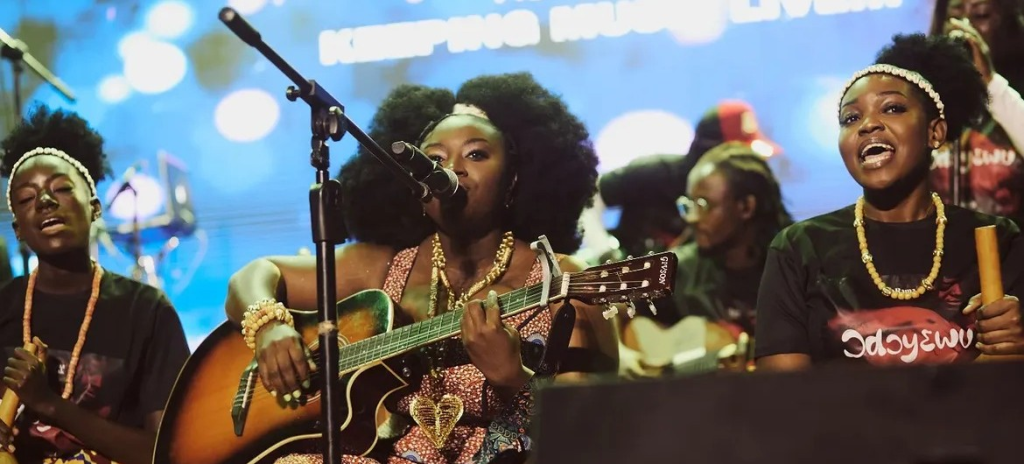
THE STORY OF ADENKUM
In Ghana, women in indigenous Akan societies have shared knowledge and passed down tradition for centuries through rites, work, music, and dance. Music and dance have long given women a space to express themselves, share experience, and speak on issues that could not always be discussed openly.
One such tradition is Adenkum, documented among Akan women since around the 18th century. Named for its distinctively shaped calabash gourd instrument, Adenkum served both an educational and entertainment purpose a space for women to tell stories, share their experiences, and address issues affecting their communities.
Over time, the tradition declined, with only a handful of groups still performing it today.
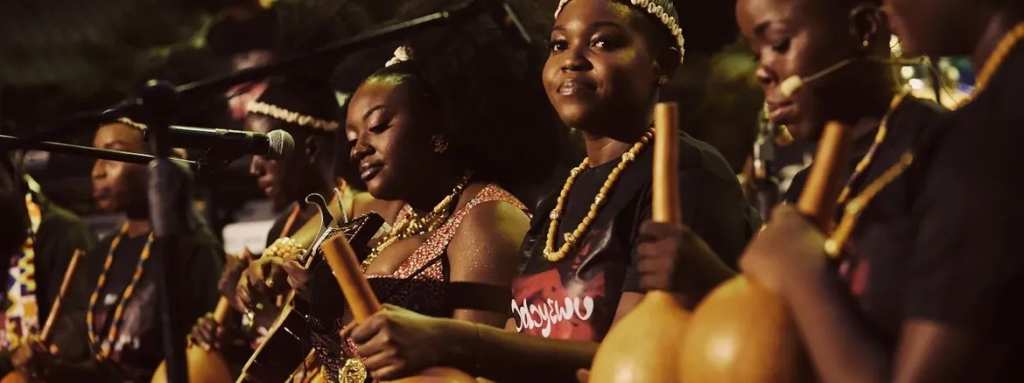
The Adenkum calabash — carried by each performer as both instrument and voice
THE BAND
Duafe Adenkum Band was founded in March 2025 by Rama Blak, following the completion of her MPhil research on the revitalisation of Adenkum. Rama brought together students and friends from the University of Ghana’s Department of Music to carry the research from the classroom into practice. Duafe’s mission is to revive and reintroduce Adenkum to contemporary audiences — not only as a tradition to be preserved, but as a living musical practice that can educate, entertain, create opportunity, and contribute to Ghana’s contemporary music industry.
Since its founding, the band has performed on several prestigious platforms, creating performance and income-generating opportunities for the young women and students who make up the group. Duafe is as much about creating space for young women to develop musical skill, gain professional experience, earn income, and take an active role in Ghana’s music industry as it is about preserving the tradition itself.
Duafe Adenkum Band performing live — Accra, Ghana
LED BY A SCHOLAR-PERFORMER
Rama Blak (Awura-Ama Agyapong) is a Ghanaian singer, songwriter, and ethnomusicologist currently pursuing a PhD in Ethnomusicology at the University of Ghana. Duafe grew directly out of her MPhil research on Adenkum – giving the band a rare foundation: performances rooted in genuine scholarship, led by someone equally at home
on stage and in the classroom. It is this dual grounding that makes Duafe well suited not just to perform, but to teach.
RIG
• Lead Vocals / Adenkum / Semi-Acoustic Guitar — Rama Blak
• 6 Vocalists / Dancers / Adenkum
• Semi-Acoustic Guitar
• Percussion / Background Vocals
• Gome / Background Vocals
• Bell & Shaker / Background Vocals
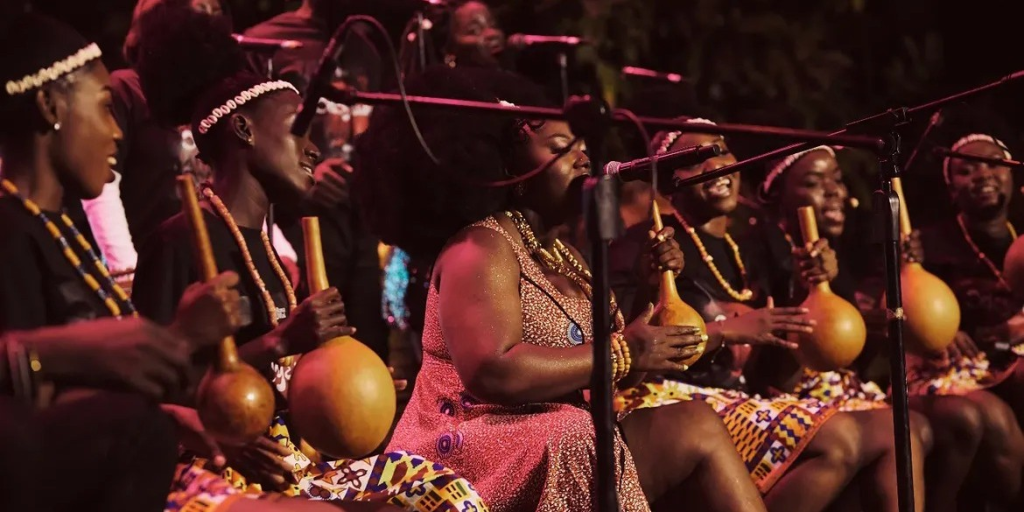
Live performance featuring the full Adenkum ensemble
WHY DUAFE ADENKUM RESONATES GLOBALLY
Duafe offers a rare combination: a centuries-old women’s oral tradition, told through an instrument found almost nowhere else, performed by a young, professional, contemporary ensemble. Beyond concert performance, the band’s grounding in research and community creates a natural opening for workshops — sharing the history and technique of Adenkum with audiences and musicians internationally, and connecting Ghanaian women’s musical
heritage to a wider global conversation.
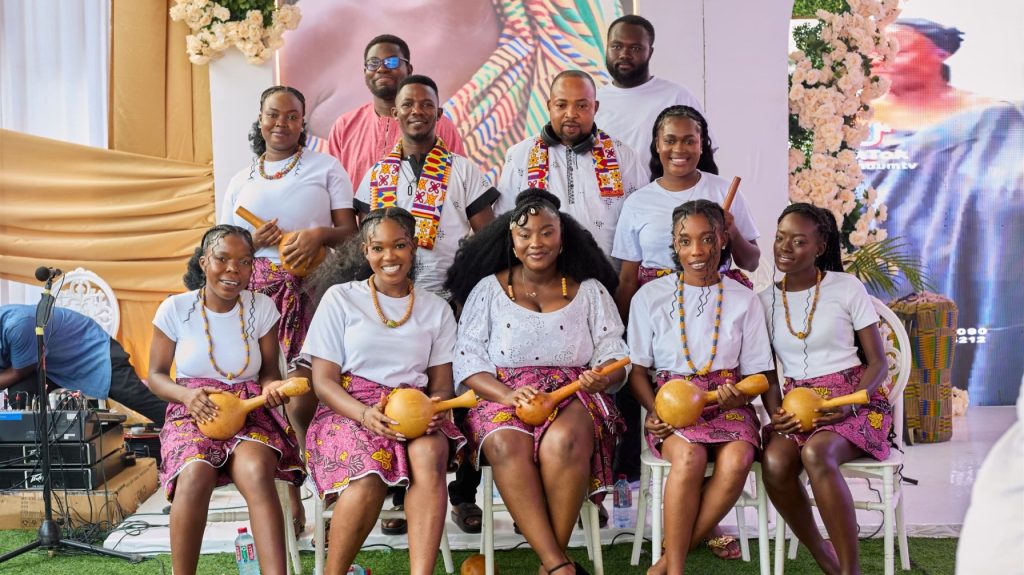
Rama Blak and the Duafe Adenkum Band, alongside media partners
WORKSHOP & CULTURAL EDUCATION EXPERIENCE
Duafe Adenkum has experience engaging international audiences beyond performance through workshops, demonstrations, and cultural education.
New York University (NYU) — Ghana: Rama Blak has facilitated an annual workshop for NYU students participating in summer programmes in Ghana. The workshop introduces students to Adenkum music, cultural context, and the role of women in this indigenous Akan tradition, providing participants with a practical and immersive way of engaging with Ghanaian cultural knowledge.
Abibikwantuo — Akan Twi Study in Ghana Programme (2025): Rama Blak also facilitated a workshop for participants of the Abibikwantuo programme, introducing them to Adenkum through music, movement, participation, and cultural storytelling.
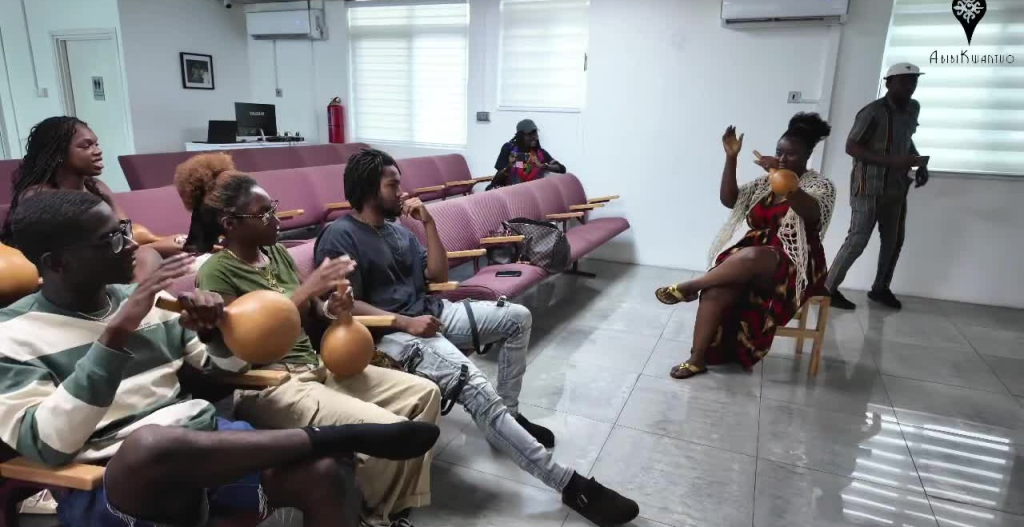
Rama Blak leading a workshop with the Abibikwantuo Akan Twi Study Programme, 2025
These experiences demonstrate Duafe Adenkum’s ability to connect with international audiences not only as performers, but also as cultural educators and facilitators. The group’s workshop format creates an accessible entry point for audiences unfamiliar with Akan traditions, making Adenkum particularly suited to cultural festivals, universities, schools, museums, community programmes, residencies, and intercultural arts initiatives internationally.